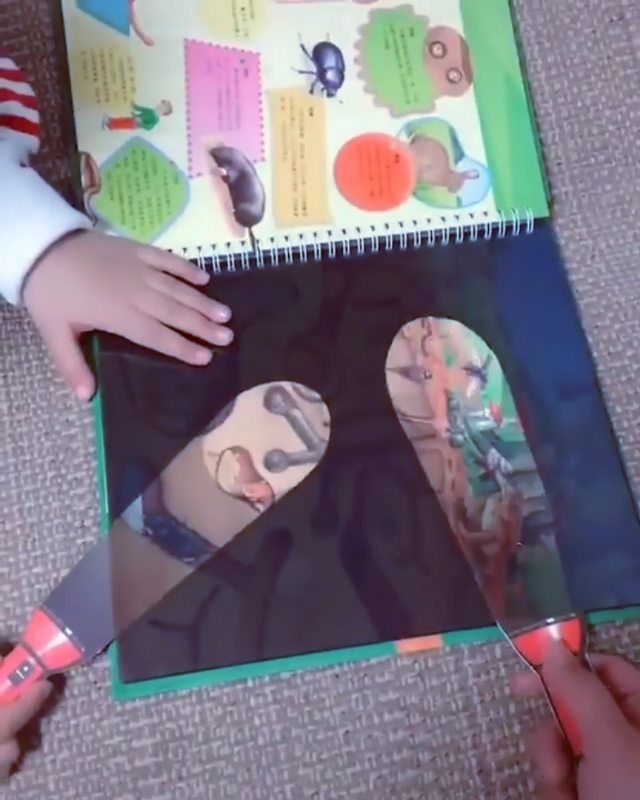
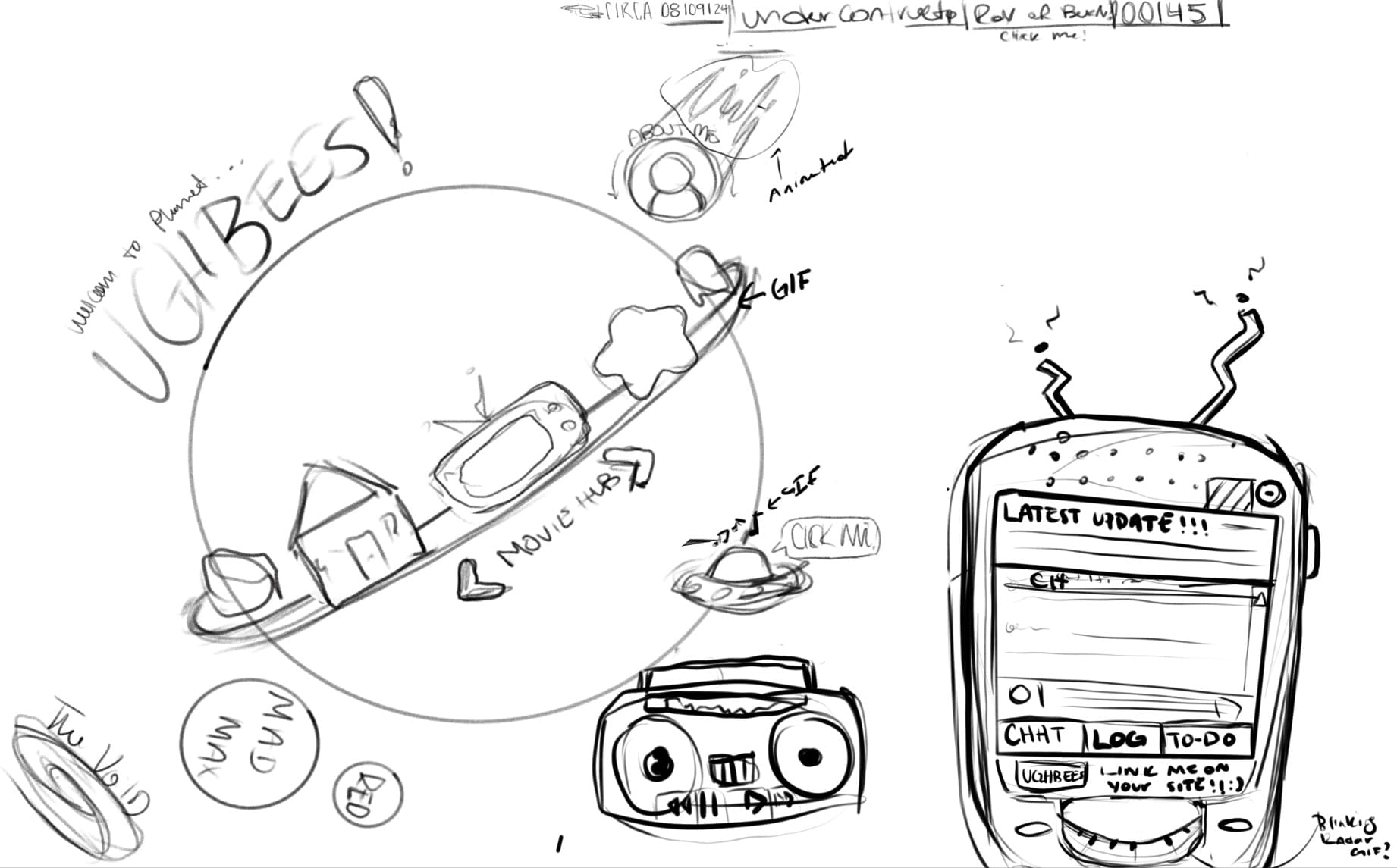
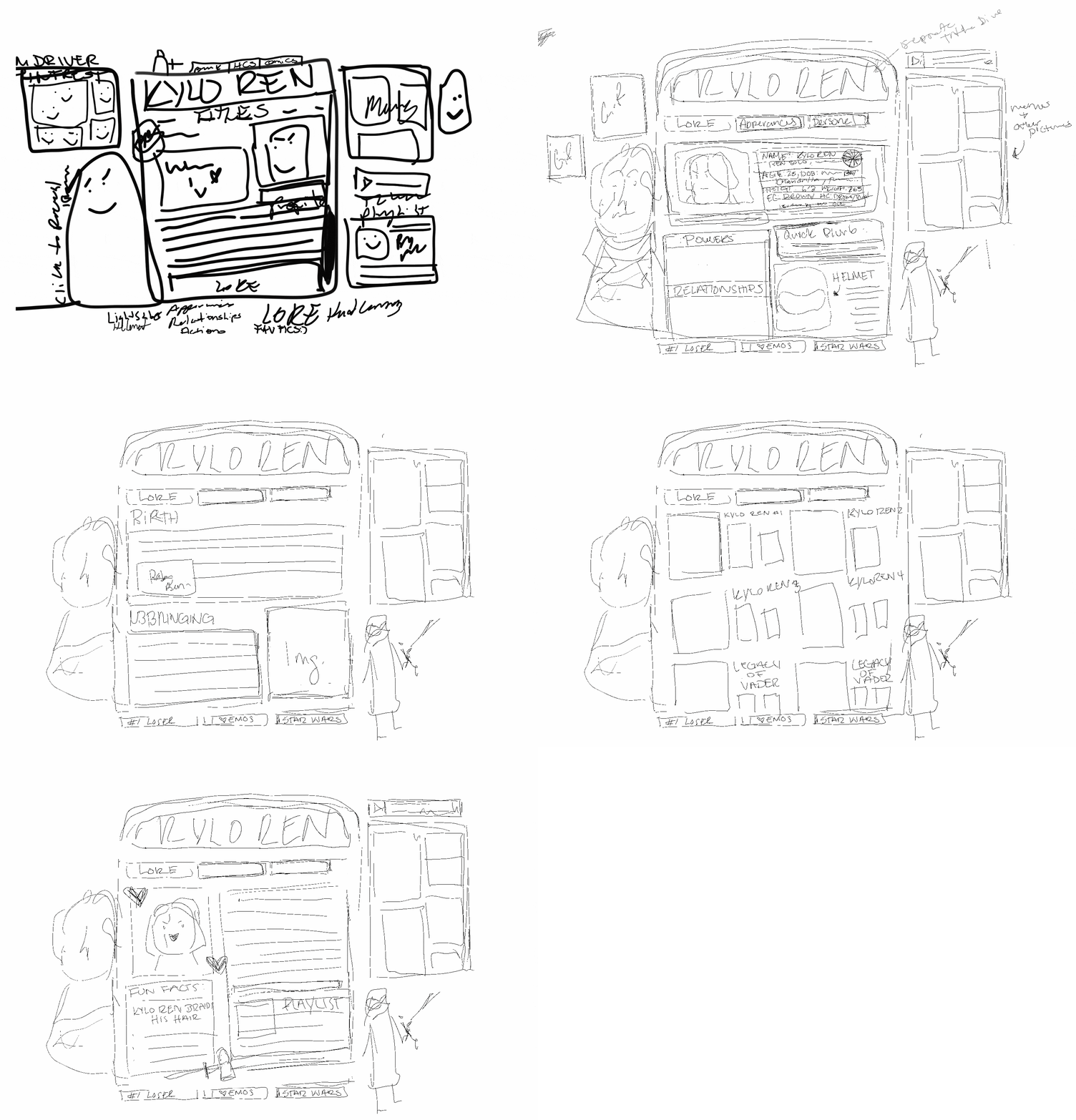
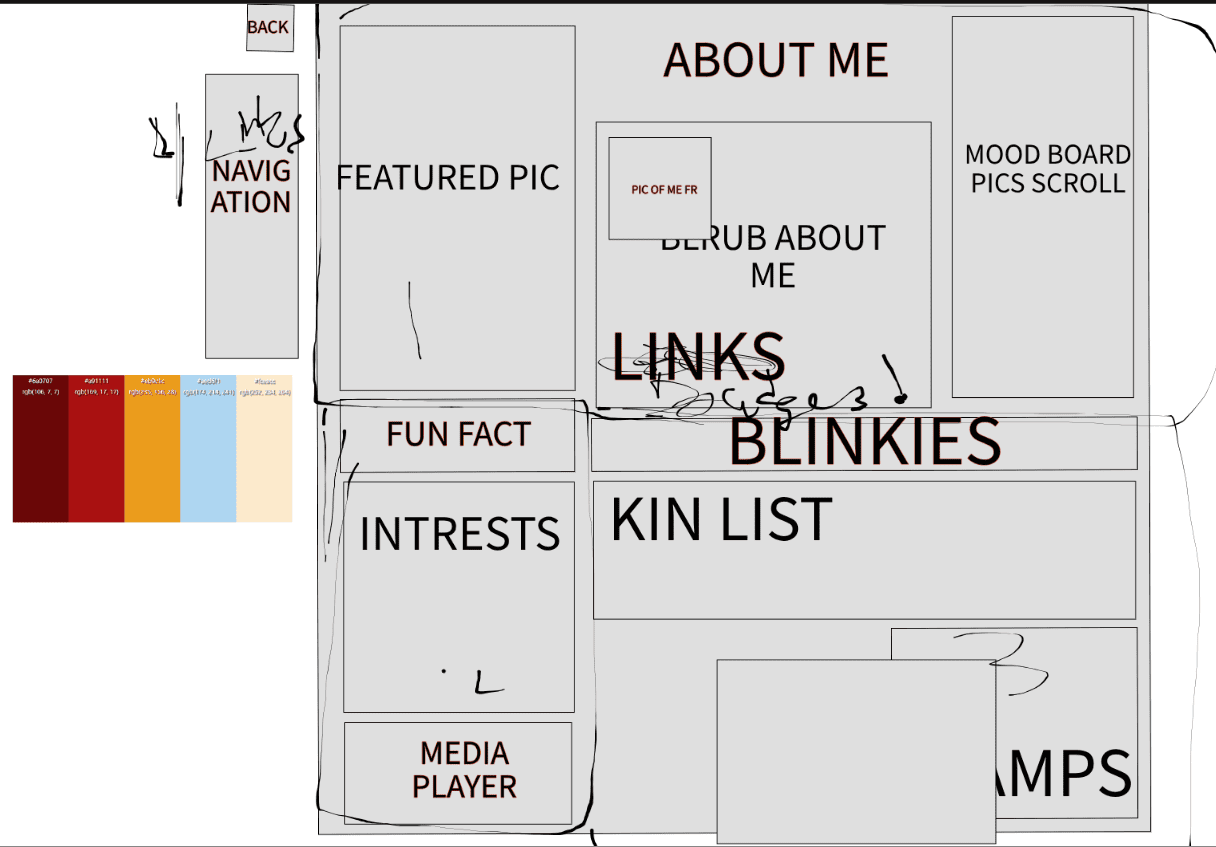
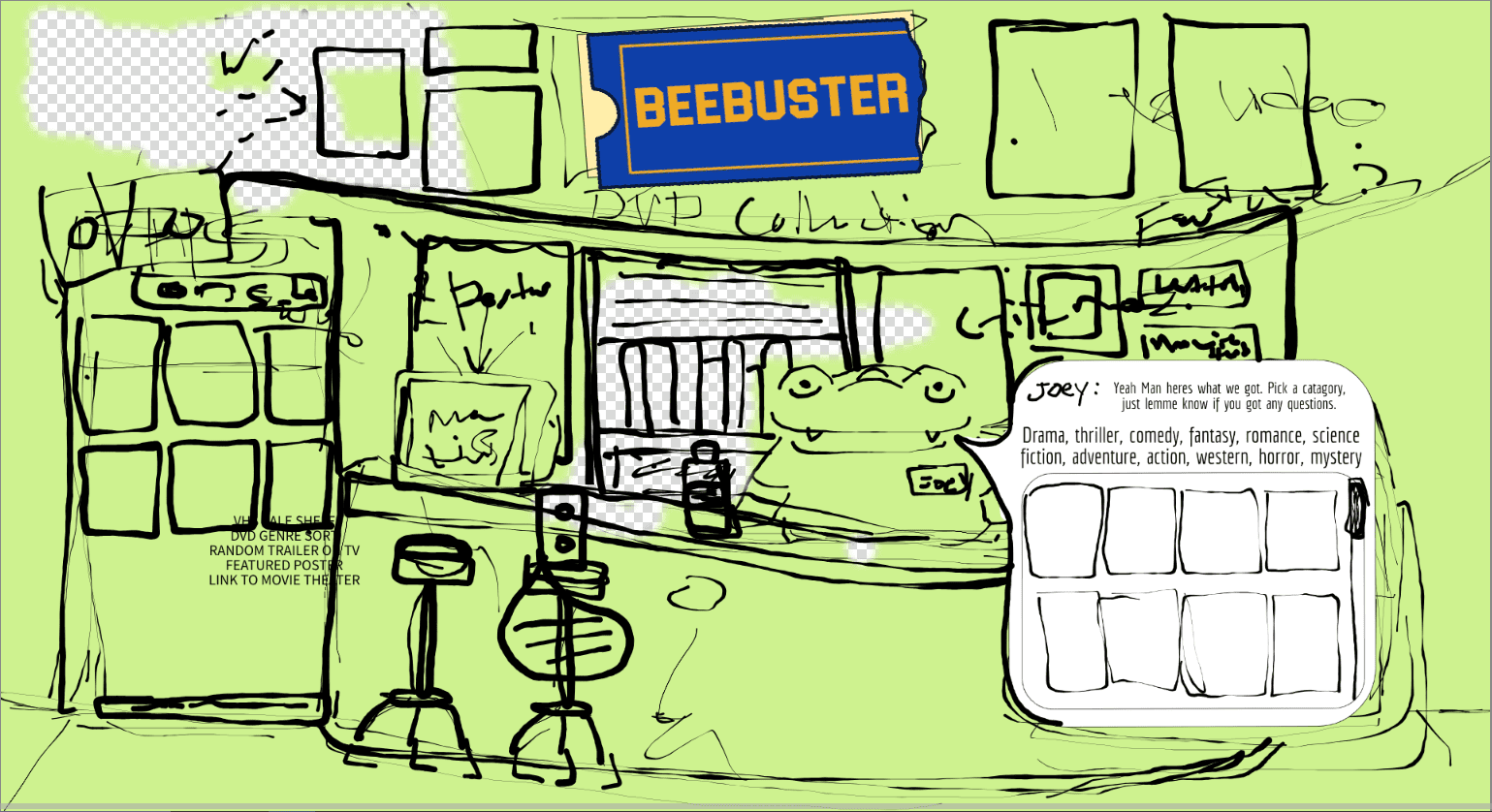
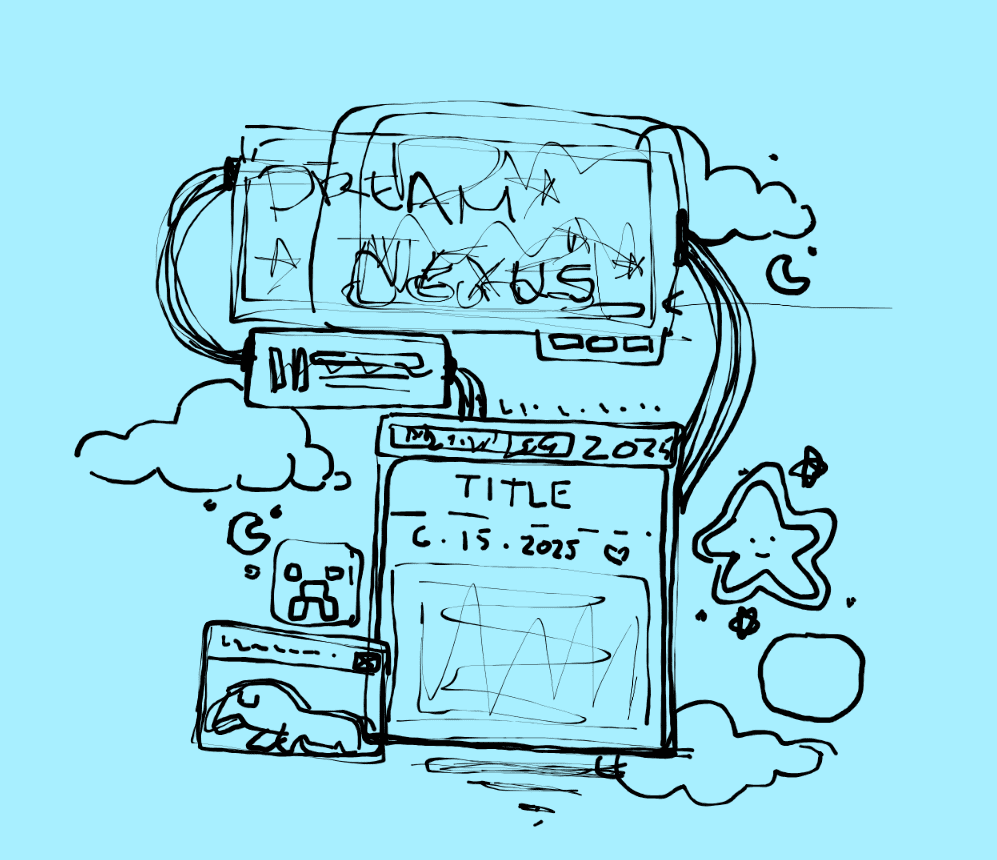
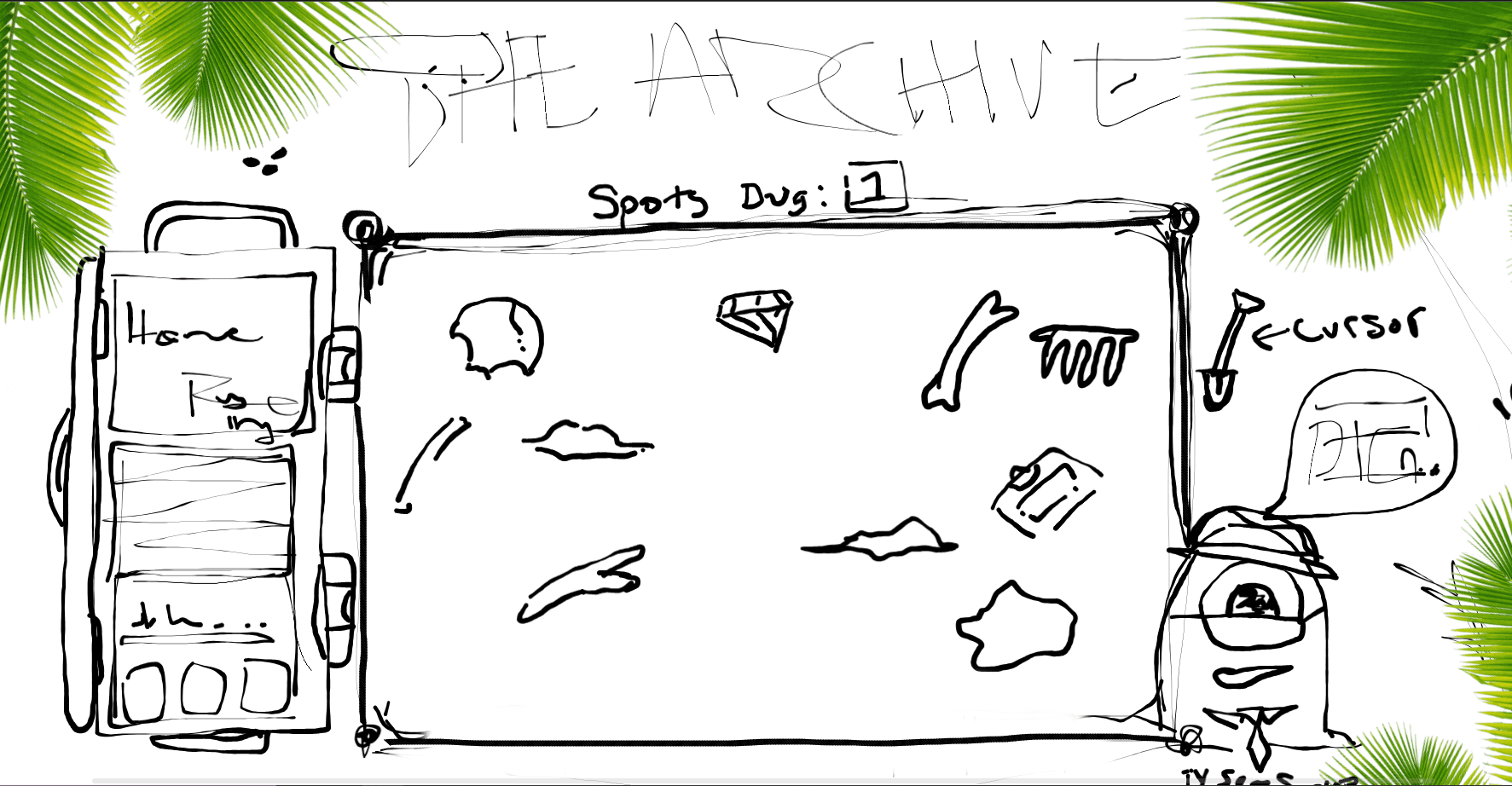
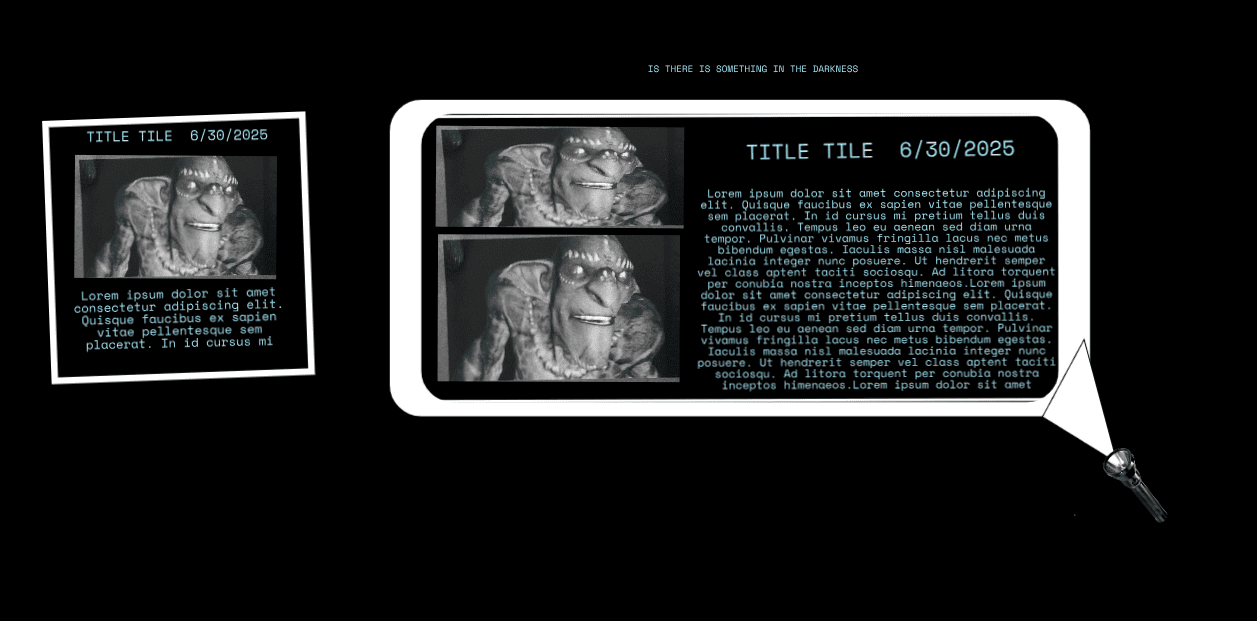
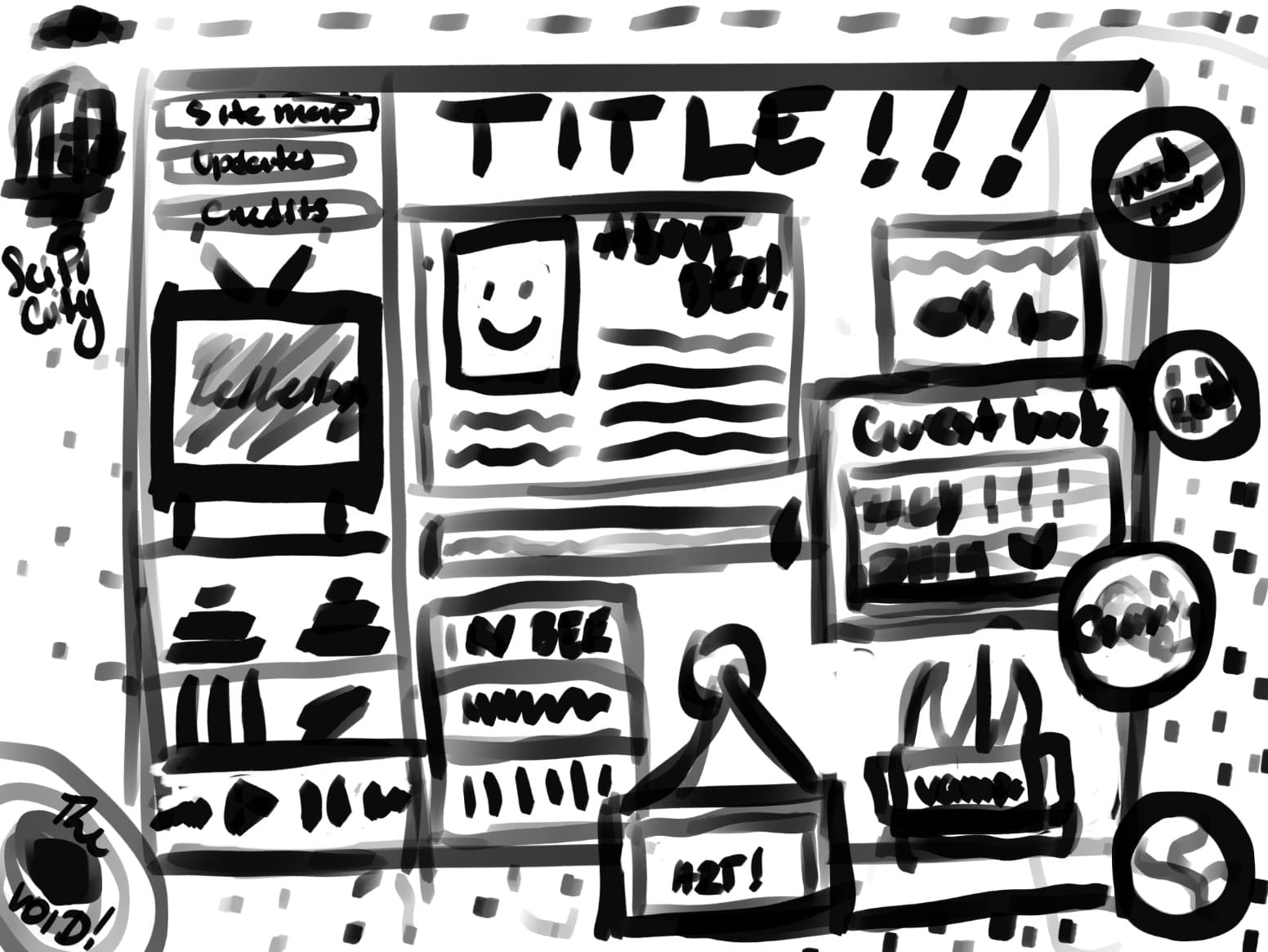
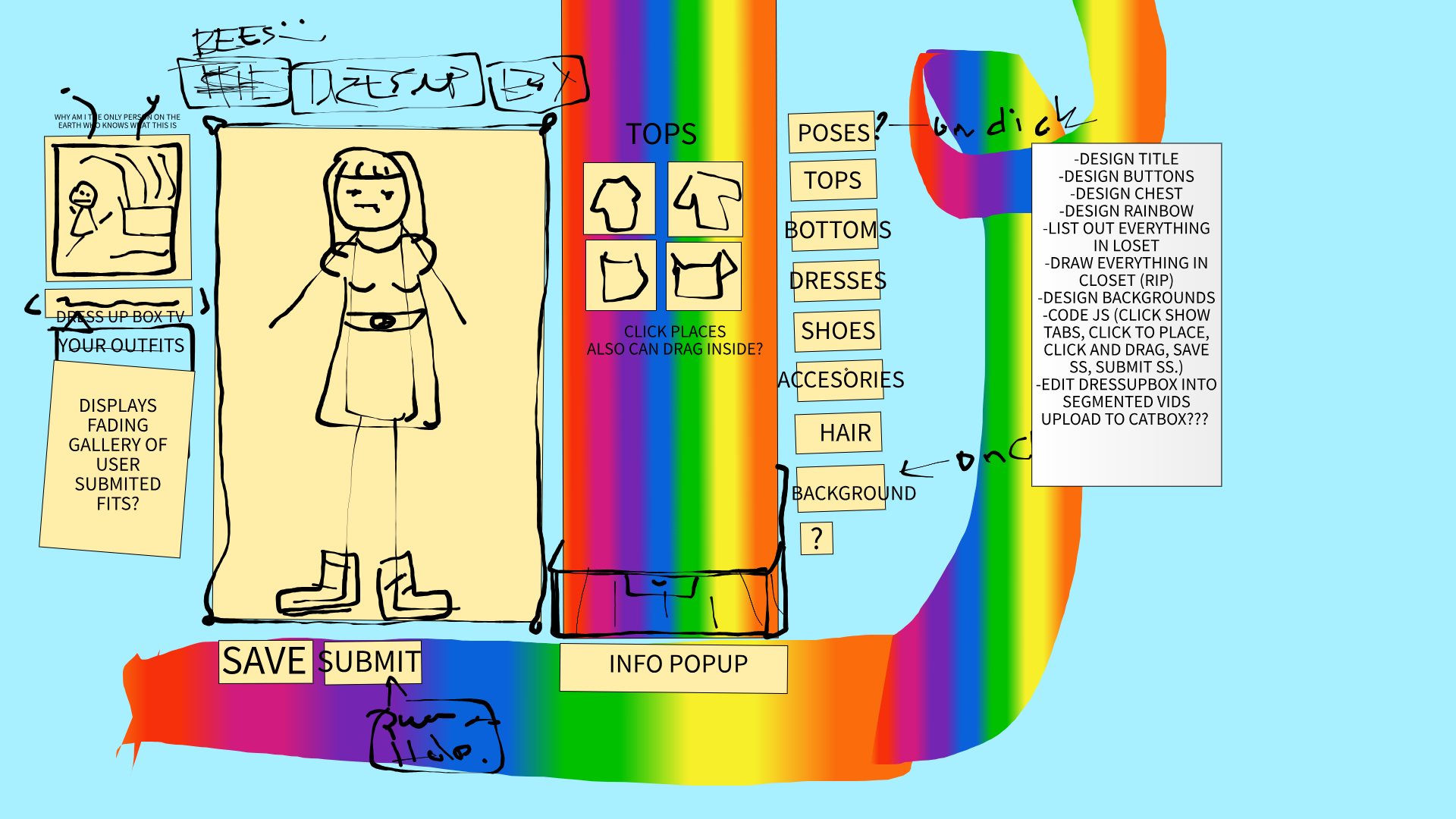
 I like the simplicity of the bear blog for big ideas + updates. But I am growing tired of the free account limitiations. This will be a space that will hold whatever I please, so basically a microblog. This layout was inspired by a book I had as a kid!! See Image.
THE BLACK HOLE
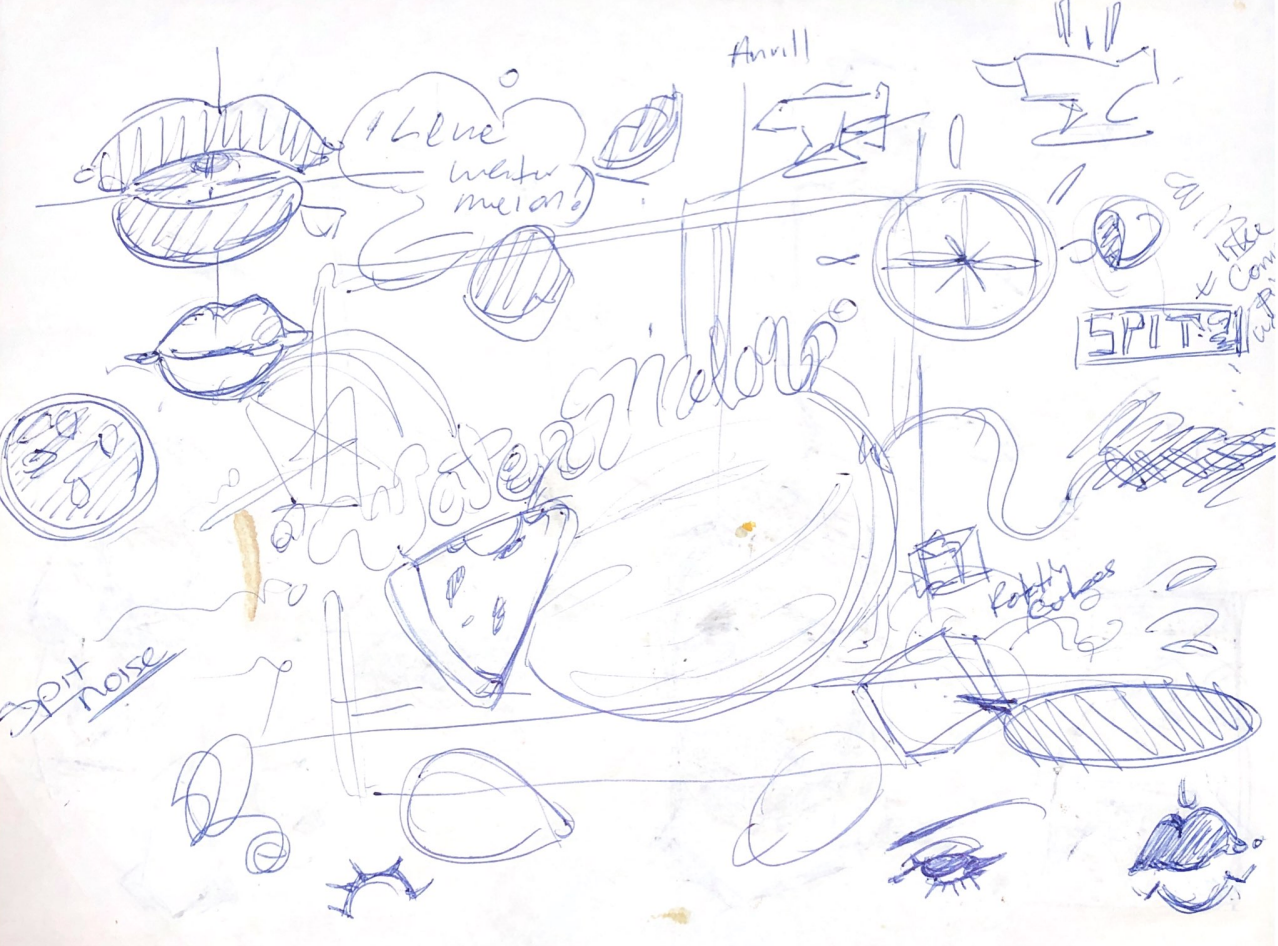
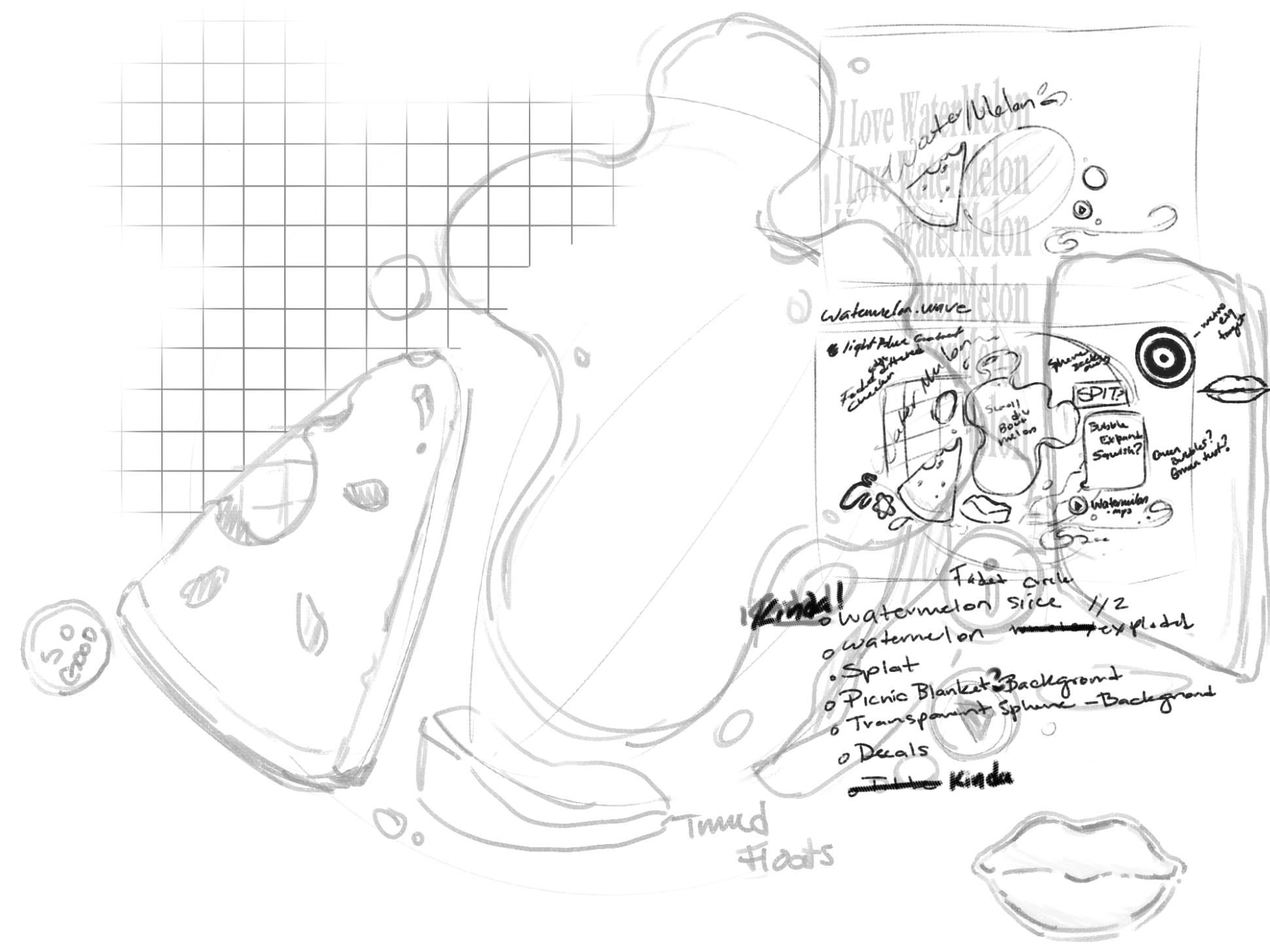
WEBSITE LAYOUT SKETCHES




CREATURE FOUND!!!!! 8〡18〡2025
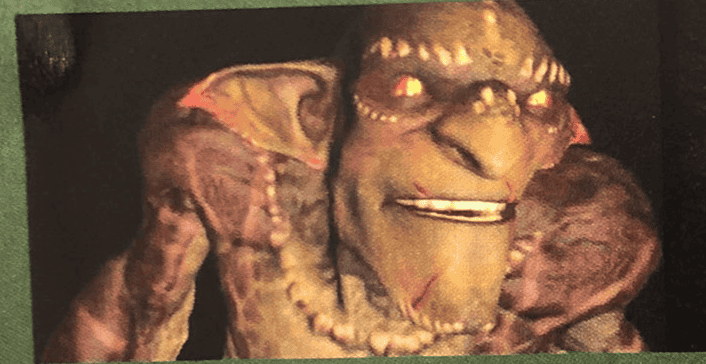 UPDATE HUGE UPDATE!!! I SOLVED IT!!!!
A few weeks ago Coffeeplant reached out to me after selflessly doing his own extensive research and informed me that this HAD to be Styx from the video game Styx Master of Shadows. This was huge, because it is 100% him but WHY is he naked and un-rendered? What do the French film nerds have to do with a video game from 2014? We both had no idea. The only thing I could do was go back to the bookstore and hope for more context in the magazine. Which I have done and OH MY GOD. I did find that they listed the movies they were compairing. I was too much a dingus to take a picture of the full spread... so I would have never known if I didn't come back to check! I can report, that this IS Styx from the French movie Elle (2016) by Paul Verhoeven (yes that Paul, robocop, star ship troopers, basic instict etc). I figured I would watch it now that I knew the movie... and HOLY FUCKING SHIT. Nothing. Genuinely nothing. Could have ever prepared me for what this movie is about, what the context of this image is, or what HAPPENS in this film. It is hands down the craziest movie I have ever seen.
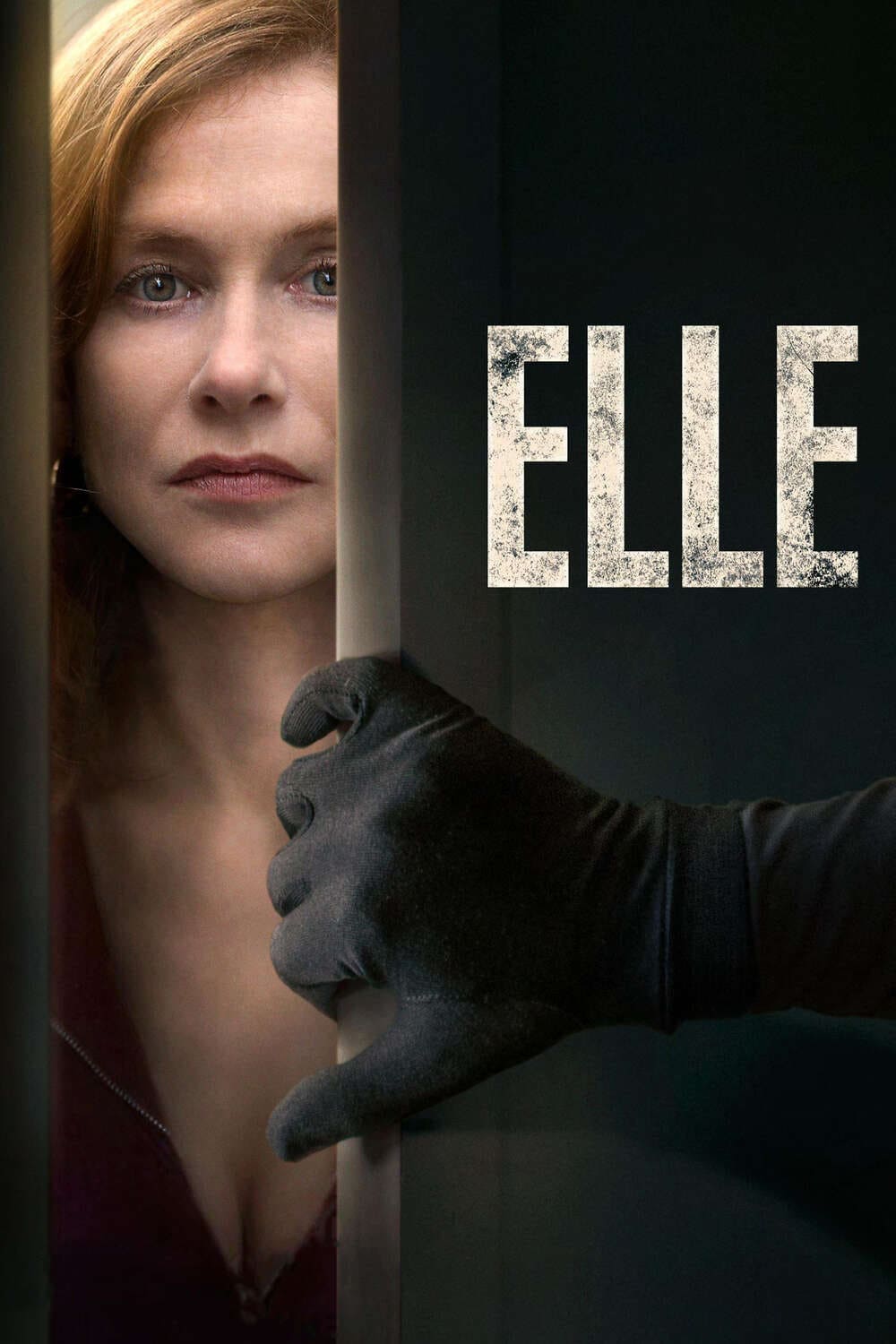 Elle follows Michele, a successful and ruthless video game company CEO as she attempts to track down the man who sexually assaulted her in her home. She refuses to let it alter her precisely ordered life. She manages many crises, all the while becoming engaged in a game of cat and mouse with her stalker.
I do not want to fully spoil this film because I think if you can stomach depictions of sexual assualt and violence, you should watch it. It is insane. Every plot point is crazier than the last one. Every scene will have you pausing it and going NO WAY or laughing your head off. It is so terrible it becomes a goldmine. It is perhaps the most woman written by a man movie of all time, psychotic. But I do want to give context for the picture of Styx. STYX CONTEXT SPOILERS FROM HERE ON OUT:
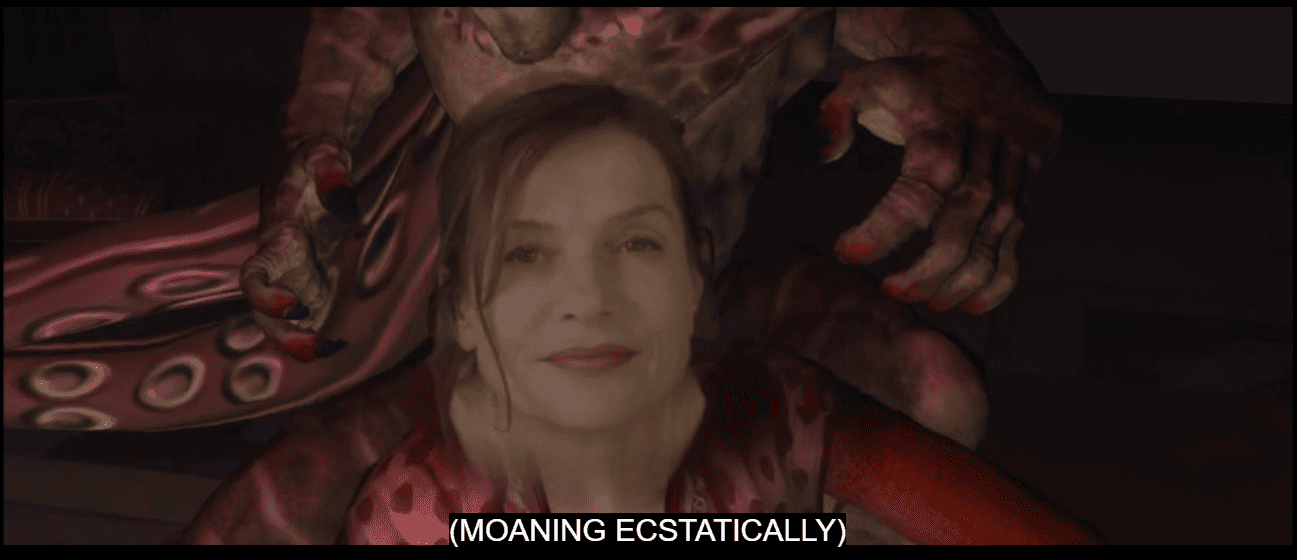
So as it says on the tin this movie revolves around Michele being the CEO of the company developing the game Styx. In it theres scenes of the studio office, bts development stuff from the game itself, concept art etc. It is a interesting setting... to say the least. This photo comes from a scene where they are showing to the dev team in-game cutscenes, and going over what needs to be changed. Michele's whole deal is that Styx needs to make gamers get boners and feel the blood on their hands. In this cutscene Styx shoots tentacles out of his chest and kills a woman on a table by stabbing the tentacle through her skull. I have attached the video of this down below. However it does not stop there. Later on in the movie this same scene is digitally altered by what she and the audience can only assume is her assaulter. In this new cutscene, Styx sexually assults (with his chest tentacles) the same character now with Micheles face on it. Not kidding. The culmination of the film happens at a fake game launch party and after a extremely violent depiction of SA it cuts to the STYX GAME TRAILER. Insane. I laughed so hard in disblief I cried. So much more happens in this film, it is seriously INSANE. I wish I could say that the CGI Goblin game is the craziest part but it is not even close. Please watch this, I cannot be the only one. My god. Now I have GOT to play Styx Master of Shadows ASAP.
Case Closed! What a rush! (See below for the orginal post).
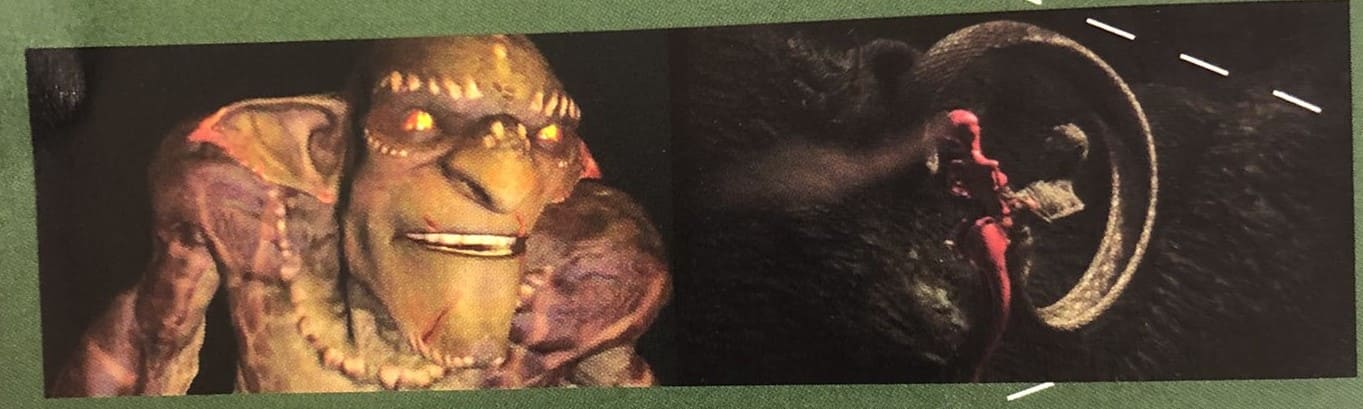
 Original Post:
7/4/2025 While at the bookstore yesterday looking at film magazines, I stumbled across the December 2019 No. 761 copy of Cahiers Du Cinema. (NOTE: I can read some French but I also did not have the time to read the entire magazine). In this edition they list the top 10 films of the decade. On pages 18 & 19 I think they were comparing similar shots with the film Holy Motors. This CGI 3D Animated Golbin/Troll thing caught my eye, it is being compared to the motion capture snake intercourse scene (lol) in Holy Motors. I took a picture of it because I had to leave and I figured I could find it at home. Well turns out after literal HOURS of searching, I have not a CLUE what this thing comes from. If you happen to know please contact me!!
WATCH THIS MOVIE!! 7〡28〡2025

 Population: 1 is a post apocalyptic PUNK musical about a defense contractor who is the sole survivor of a nuclear holocaust. In his solitude, he traces the history of U.S. civilization in the 20th century via music. Starring Tomata Du Plenty!!!! of the The Screamers and Sheela Edwards or Drusilla. It is fantastic and I think more people should watch weird stuff. It is on Youtube! Watch my weird stuff!!! At least check out my favorite number (see video below). Jazz Vampire!
MY CHEMICAL ROMANCE!! 8〡09〡2025
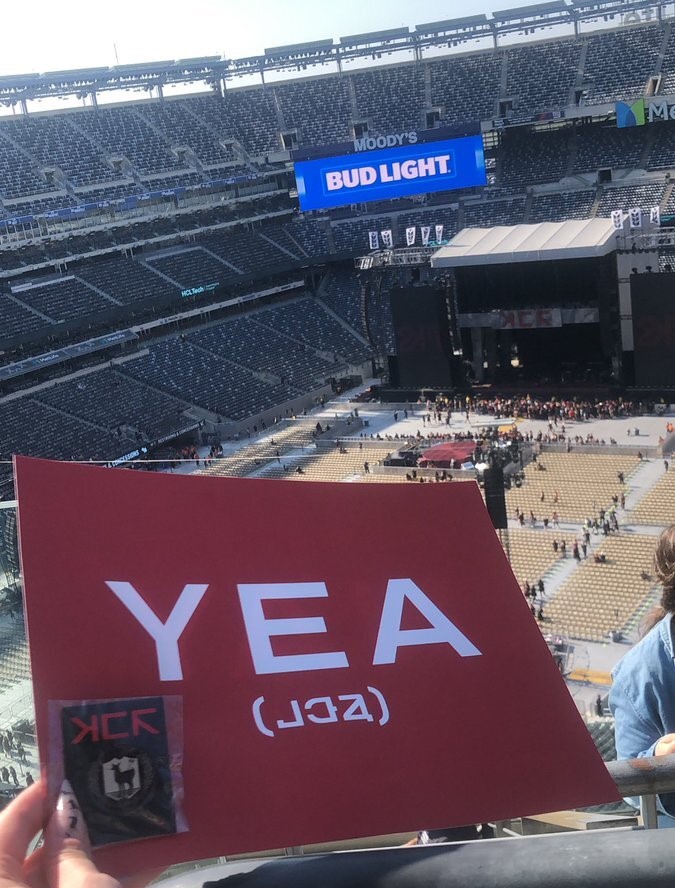
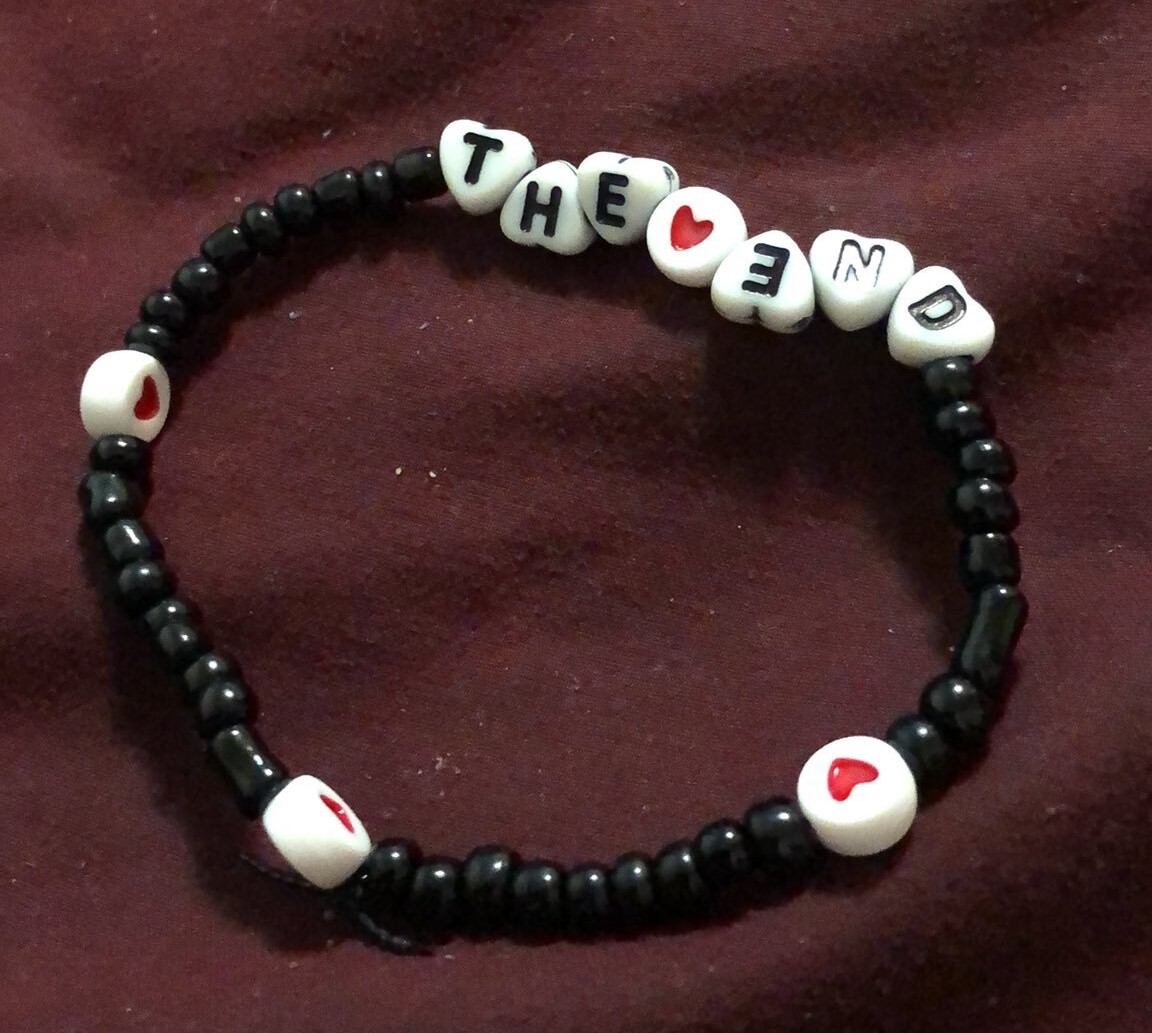
 Yesterday!!! I saw My Chemical Romance perform at Metlife Stadium in New Jersey. Which is a pretty big deal for me (long story), and it was the greatest time ever. I dressed up as a vampire and a bunch of people complimented me. That was very nice. The merch for this tour is super expensive but I got the $10 deer pin, and someone gave me a charm bracelet.
  I was in the 300 section but my view was pretty good (couldn't see the moon but it is OK I saw it later on). The people around me didn't match my energy AT ALL. I do not understand going to stadium tours of bands you have no idea about. Why doesn't anyone wanna SING!!!! Well I picked up the slack for everyone. Shredded my vocal chords and danced till my feet bled. Also not to forget I saw THURSDAY (I love you Thursday). The song selection was really great. Falling Bomb paired with the airplanes flying directly over the stadium was magical!!! I honestly thought they were gonna come out again at the end of the night and do Jet Black New Year with MCR. We got a Living on Prayer cover??? Which I spent for the most part going "oh my god no way!?!??" Laughing in glee. I cried for most of TBP. And I sang the new part of Mama when no one else around me would. I came PREPARED. The setlist spoiled me so much. I have been telling everyone since November that I would get to hear Vampires, that it was going to be a full moon and I NEEDED to hear Vampires live, I even dressed up as one... So it would have been really embarrassing for me if they didn't play it (not really but I like being kooky). Specifically I have written down in my setlist predictions as: Vampires; Ghost of You, Sorrows and Skylines (because NJ even though they hate playing it, I had faith). #IALWAYSGETWHATIWANT #BLESSED #IWIN. Manifesting WORKS!!!! Literally so fucking good. I have attached the video I took of Our Lady of Sorrows for prosperity (listen to how embarassing I sound. I love my chemical romance ssosoosososo much). The video I took for Vampires is close to incomprensible because I was crying and screaming straight gibbrish I was so overwelmed, my heart rate went up to 206! I was on top the world (about to pass out). One of my favorite things about going to a big concert is messing up the words because your brain can't believe what it is witnessing. MY CHEMICAL ROMANCE IN 2025!!!! AHHHHHHHHHH!!!!!!! OH! And they got the key to Belleville!!!! WTF!!!!!! Frank was so cheesed out the entire night. My heart weeps. I want to relive it again and again and again.


MY NEW SETUP !!
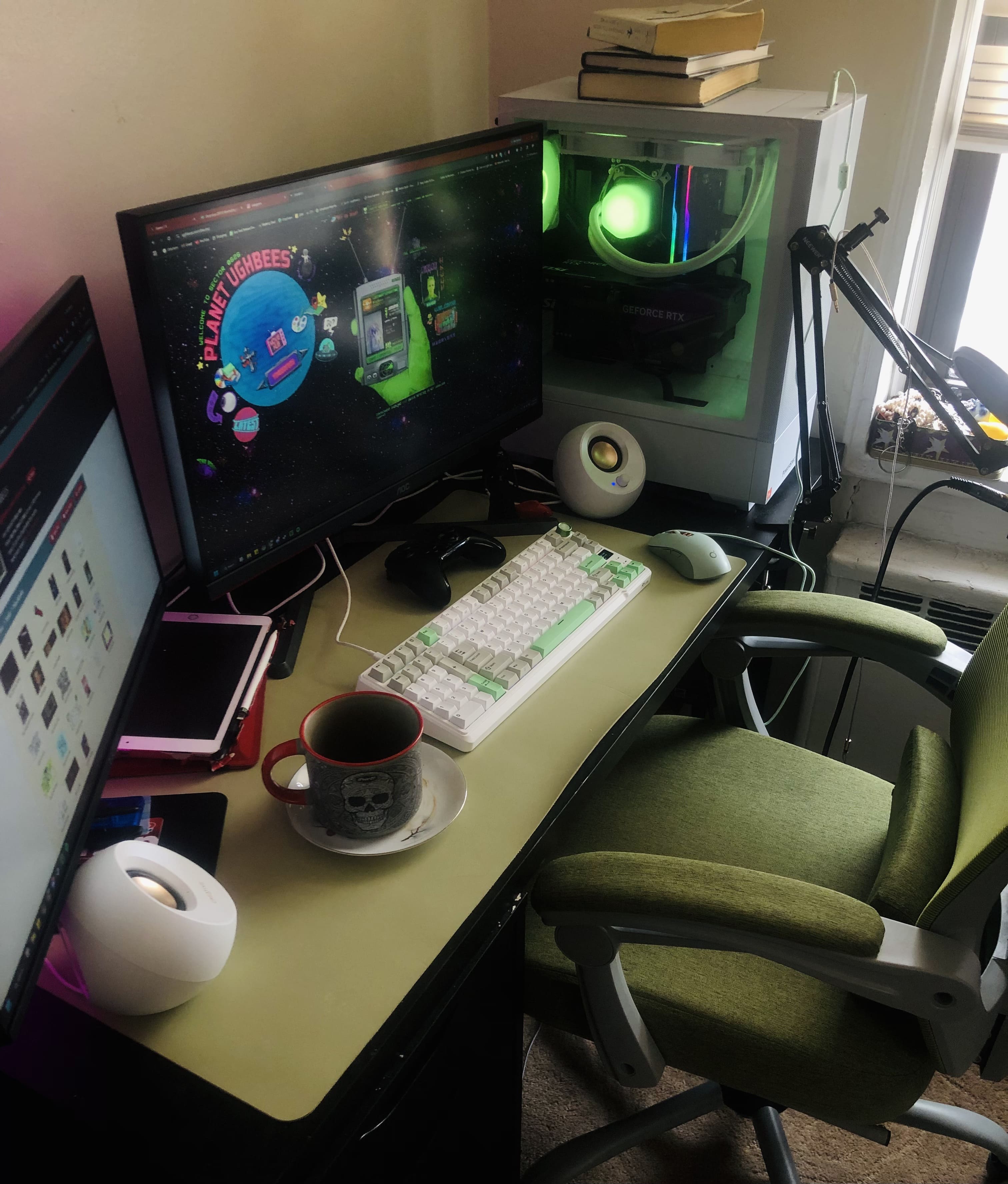 New desktop setup of my wildest dreams. I had to practice 6 months of patience for this thing, I should get a GOLD star from a Zen master. My favorite color is Red... do not ask me why everything is so green. It just
worked out that way price wise. Here are the deets:
New desktop setup of my wildest dreams. I had to practice 6 months of patience for this thing, I should get a GOLD star from a Zen master. My favorite color is Red... do not ask me why everything is so green. It just
worked out that way price wise. Here are the deets:
LORD THADDEUS THE FIRST OF HIS NAME (G730 Powerspec)
- AMD Ryzen 7 7800X3D
- Gigabyte B850 Motherboard
- 32GB DDR5-6000 RAM
- NVIDIA RTX 5070 Ti
- 2TB NVMe SSD
Other Stuff:
- AOC Q27G3XMN 27" Monitor (The HDR on this thing is kinda wacky. I feel Spoiled)
- LG 24U411A-B 24" Monitor (Every nice monitor needs a little budget buddy)
- Royal Kludge L98 with Beige Switches (Left Numpad so I can code faster or something like that. IDK it was on sale. It is a very nice sounding keyboard)
- Creative Pebble V3 Speakers (sometimes reddit is so right!!! these things are SO good for the price)
- Audio-Technica AT2020 Microphone
- Focusrite Scarlett G3 Audio Interface (as if I talk to enough people for all this)
- EWEADM G309 Mouse (green mouse to match everything else)
- Green Desk Pad (because green)
- DUMOS Chair, has a foot rest and it's (spoilers) GREEN!
For someone who has shit luck with technology... I sure got a lot of technology now. No body move.
ASIN TIBOUK !!
 I was randomly gifted an artisanal rare salt from the Philippines and I must talk about it. Asin Tibuk is considered one of the rarest salts in the world. It is nearly extinct due to the ASIN law of 1995 which requires all salt to contain Iodine (this shifted the market to imported salts and practically killed the salt trade in the Philippines), and they cannot sell it on store shelves. It is made ONLY on the island of Bohol and there are only a handful of families in Alburqueque, Bohol that still produce it. The entire process of making this salt is extremely EXTREMELY labor intensive!
The Process:
Watch this video about it here! My words alone cannot express how cool this is.
The traditional method of making Asin Tibouk can only be done from December to May due to seawater fluctuations during the rainy season. It starts by soaking coconut husks for several months in seawater pits that are continually refreshed with the tides. The soaked husks are then chopped and dried for several days. They cannot get wet (rain washes away the seawater) or the entire process has to start over. Once dried the husks are burned for several days in a large pile until it is completely reduced to ash. This fire has to be watched over the entire time to ensure it doesn't get too big or too small. The ash, aka gasang, is compacted into a large bamboo filter lined with palm leaves. Slowly seawater is poured on top, pulling salt from the ash and filtering detritus. The resulting brine is called tasik. The clay pots used to cook the salt that give it its unique shape are also only made on the island, all completely shaped by hand using local clay. Setting up the pots onto the furnace for cooking (using small rocks and iron rods) is also extremely time consuming because any holes or instability may result in having to start EVERYTHING over.  Once they are properly in place, 2-3 workers (over the hot as hell furnace) continuously replenish brine till it is completely reduced and the clay pot is full. This process usually takes 8 hours!!!! They then leave the pots to cool overnight and they naturally crack revealing the salt inside. They are then cleaned up and sold as is. Truly an awesome craft, I am overjoyed to have one in my apartment.
Flavor:
You have to believe me when I say this is the COOLEST salt I have ever had the pleasure of trying. I mean I have tried a lot of salt in my life and I think this is 10000% without a doubt the most unique and distinctive in flavor. Terroir in all meanings of the word. I would describe it as smoky, earthy, umami, fruity, coconut, with a subtle sweetness. It is like you are in the tide pit with your head under the water. The initial taste is full earth and it slowly fades into incredible depth. I wish I could have everyone try it. If I close my eyes I am eating the fried egg (my tester) on a beach in the shade, salt and foliage on the breeze. SO cool. I watched a few videos and a lot of the craftsmen described its taste as literally being that of the water around Bohol, which I have no doubt about. It is incredible. One of my favorite things about food is being able to taste the location it was made in, so this is really special for me. The texture is super duper fine as you typically use a microplane to dust it onto things. If I had more confidence in my ability to acquire another Asin Tibouk I could crush chunks into a fine paste and use it liberally to cure meats, but this thing that I so graciously got for free would run me about $200 USD… so I am going to stick to the dusting and cherish the years with it forever.
TLDR: if you ever are in the Philippines head over to the gift shop at the museum in Bohol and pick up one of these. (Or spend a pretty penny for over seas shipping and support a dying craft).